Plant Biology Institute
.avif)
Professor Steve Kelly
“While we’re focused on plant sciences, we collaborate with healthcare teams, policymakers and engineers. This integrated approach enables us to bring products to market and deliver results much faster than if each worked alone.”
Improving the productivity of every farm on earth
The green revolution in the 20th century radically increased food production, enabled by new technologies, fertilisers and knowledge.
Since then, improvements in productivity have not kept pace with the dramatic increase in demand on our food system.
To feed a growing population and support better health outcomes, we need a second green revolution. We need the technologies and data to produce more food, while reducing impacts on our planet’s climate and biodiversity.
70%more food needed
70% more food must be produced per year by 2050 in order to support the planet’s population.

50mhectares per year
If productivity stays the same, we would need to add ~50 million hectares of food production every year to keep pace with demand – greater than the size of Spain.

30%of CO2 emissions
Agriculture is responsible for 30% of humanity’s CO2 emissions.
We need a second green revolution
To support a healthy global population, the amount of food we need to produce between now and 2050 is greater than all the food produced in the last 5,000 years combined.

Improvements in productivity have not kept pace with population growth and health gains. Urgent advancement is needed to close this ‘improvement gap.’

Conversion of natural ecosystems to agricultural systems has driven the ‘sixth great mass extinction’ for biodiversity. We need to find solutions to produce more food with less space.

A warmer, drier planet makes for less productive agriculture. Increasing global temperatures and changing patterns of precipitation are changing where food can be grown and how much we can grow. We need to find ways to improve the climate resilience of our agricultural systems.

Developing improved crop varieties can take several years, and bringing them to market can take decades. We need to develop new technologies that can shorten these timelines.
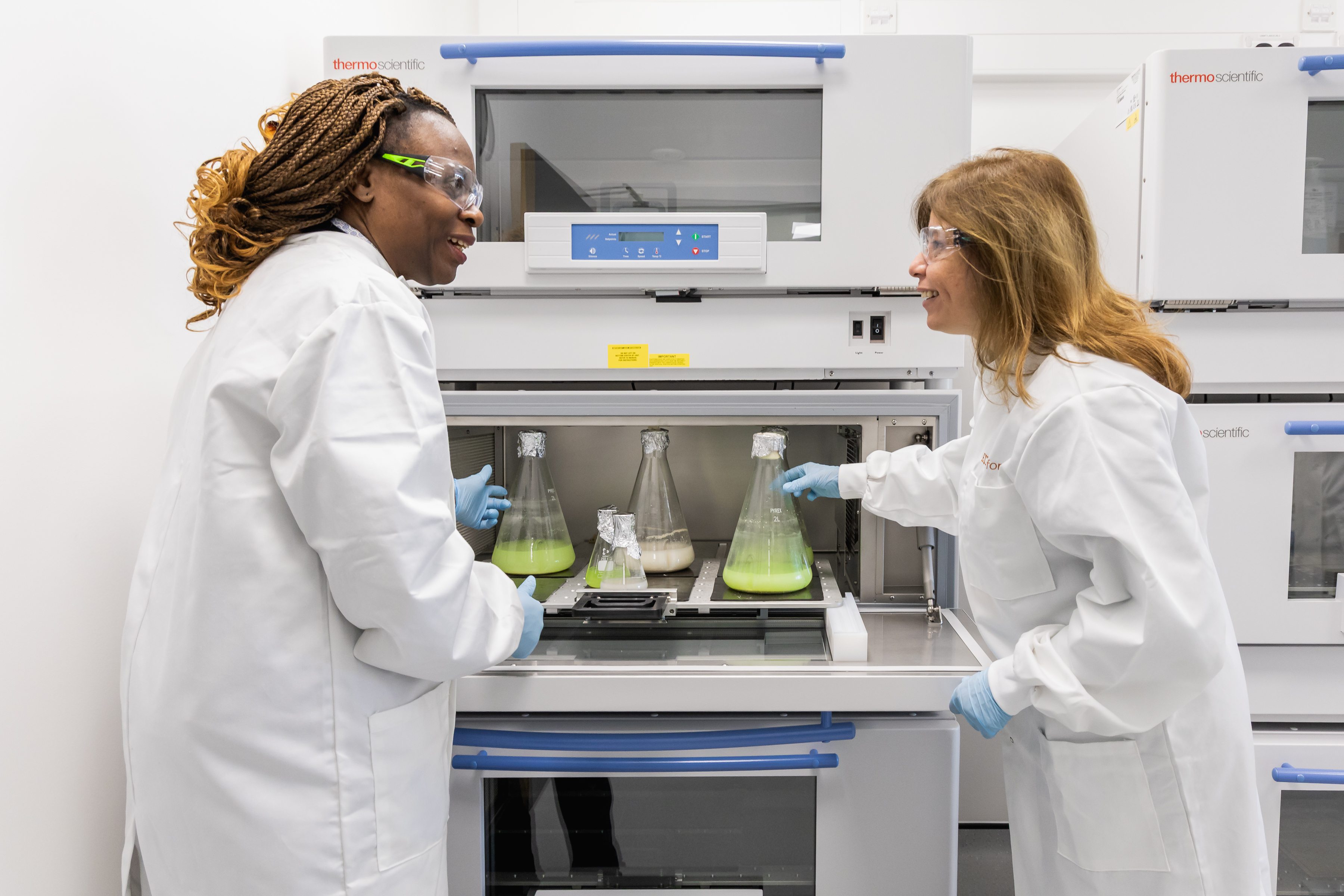

We aim to develop impactful and commercially sustainable solutions for improving global food production and planetary health through pioneering plant science research.
The Plant Biology Institute unites world-class researchers who are focused on expanding the frontiers of plant science. Our research focuses on enhancing our ability to feed the planet while simultaneously improving the climate and ecosystem outcomes of food production. By embedding cutting-edge plant science research within an organisation that is focused on solving global challenges at scale, we are accelerating the timeline from discovery to global impact.
Our researchers have access to state-of-the-art laboratory and plant growth facilities, and have opportunities to collaborate with experts at the forefront of research on AI, automation, and generative biology across the EIT ecosystem. They also work with global leaders in market development, commercialisation, and impact creation - ensuring that scientific discoveries are rapidly translated into scalable, real-world solutions for food security and planetary health.
- Climate-ready plants
- Better data to inform farming practices
- Reduce reliance on fertilisers and pesticides
- Sustainable greenhouse technologies
- Decarbonised plant cell based production
- DNA technologies to speed up plant breeding
.png)
We’re gathering the greatest minds
EIT is growing rapidly and we are recruiting at pace. Thrive in a dynamic and fast-paced work environment, learning and growing every day alongside experts in science and technology.